

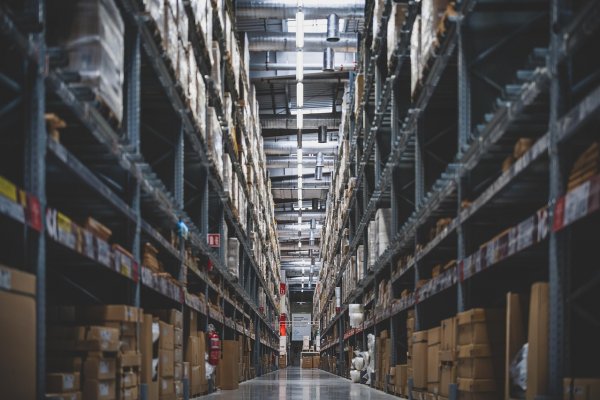
The Transformation of UK Logistics Through Technology
The United Kingdom's logistics sector is experiencing a profound technological revolution. As e-commerce continues its meteoric rise and consumer expectations for rapid delivery intensify, third-party logistics providers (3PLs) are investing heavily in warehouse management systems (WMS), automation technologies, and sophisticated inventory management solutions. This transformation isn't merely about keeping pace with demand—it's about fundamentally reimagining how goods move through the supply chain.
The UK logistics market, valued at over £127 billion annually, represents one of Europe's most dynamic and competitive sectors. Within this landscape, the integration of advanced technology has become the critical differentiator between market leaders and those struggling to survive. Understanding how inventory management, automation, and WMS work together provides essential insights into the future of UK logistics.
Understanding Modern Inventory Management in the UK Context
Effective inventory management forms the backbone of successful logistics operations. In the UK market, where space comes at a premium and customer expectations continue escalating, optimizing inventory has never been more crucial. Modern inventory management extends far beyond simple stock counting—it encompasses demand forecasting, multi-channel integration, real-time visibility, and intelligent replenishment strategies.
Key Components of Advanced Inventory Management
- Real-time tracking: Instant visibility across multiple warehouse locations and sales channels
- Demand forecasting: AI-powered predictions that optimize stock levels and reduce waste
- ABC analysis: Categorizing inventory based on value and turnover rates
- Just-in-time principles: Minimizing holding costs while maintaining service levels
- Multi-location coordination: Synchronizing stock across regional distribution centers
- Returns management: Efficiently processing reverse logistics in the e-commerce age
UK companies face unique challenges including Brexit-related customs complexities, limited warehouse space in key metropolitan areas, and increasingly stringent sustainability requirements. These factors make sophisticated inventory management not just advantageous but absolutely essential for competitive survival.
The Role of Warehouse Management Systems (WMS)
A robust warehouse management system serves as the central nervous system of modern logistics operations. WMS platforms have evolved from basic inventory tracking tools into comprehensive solutions that orchestrate every aspect of warehouse operations, from receiving and putaway to picking, packing, and dispatch.
Core WMS Functionalities Driving UK Logistics
Contemporary WMS solutions deployed across UK facilities deliver multiple critical capabilities:
- Receiving and putaway optimization: Intelligent algorithms determine optimal storage locations based on product characteristics, velocity, and warehouse layout
- Picking route optimization: Systems calculate the most efficient paths through warehouses, reducing travel time by up to 40%
- Labor management: Real-time productivity tracking and task allocation ensure workforce efficiency
- Integration capabilities: Seamless connections with ERPs, transportation management systems, and e-commerce platforms
- Compliance and traceability: Critical for sectors like pharmaceuticals and food where regulatory requirements are stringent
The UK market has witnessed rapid WMS adoption, with implementation rates among mid-sized and large logistics providers now exceeding 75%. Cloud-based WMS solutions have particularly gained traction, offering scalability and reduced capital expenditure that appeals to growing businesses.
WMS and Inventory Accuracy
One of the most significant benefits WMS delivers is dramatically improved inventory accuracy. Traditional manual systems typically achieve 60-80% accuracy rates, while WMS-managed warehouses routinely exceed 99.5%. This precision eliminates costly stock discrepancies, reduces safety stock requirements, and builds customer confidence through reliable order fulfillment.
Warehouse Automation: The UK's Competitive Edge
Automation represents the most visible aspect of the logistics revolution sweeping across the UK. From robotic picking systems to autonomous mobile robots (AMRs) and sophisticated conveyor networks, warehouse automation is reshaping operational capabilities and economics.
Types of Automation Transforming UK Warehouses
UK logistics providers are implementing various automation technologies, each addressing specific operational challenges:
- Autonomous Mobile Robots (AMRs): Flexible robots that navigate warehouses independently, transporting goods and supporting pick operations
- Automated Storage and Retrieval Systems (AS/RS): High-density storage solutions that maximize vertical space utilization
- Goods-to-Person (G2P) systems: Technologies that bring items to stationary pickers, eliminating unproductive travel time
- Automated sorting systems: High-speed conveyors that route products based on destination, size, or other criteria
- Robotic picking arms: AI-powered robots capable of identifying and grasping diverse product types
- Automated packaging systems: Right-sized box selection and automated void fill reduce material waste
The Business Case for Automation
While automation requires significant capital investment, the economics increasingly favor adoption. UK warehouses face acute labor challenges, including skills shortages, high turnover rates, and rising wage pressures. Automation addresses these issues while delivering additional benefits:
Productivity gains: Automated systems operate 24/7 without fatigue, often tripling throughput capacity compared to manual operations. Space optimization: AS/RS systems can increase storage density by 85%, particularly valuable given UK property costs. Error reduction: Automated systems achieve picking accuracy rates exceeding 99.9%, virtually eliminating costly mis-picks. Scalability: Modern automation can flex to accommodate peak periods without proportional labor increases.
Forward-thinking UK 3PLs view automation not as job elimination but as workforce enhancement—allowing human workers to focus on complex, value-added tasks while robots handle repetitive physical work.
The UK's Biggest 3PL Companies Leading Innovation
The UK's third-party logistics landscape features several major players who are setting the pace for technological adoption and operational excellence. These companies manage billions of pounds worth of inventory and process millions of orders annually.
DHL Supply Chain UK
As part of the global DHL network, DHL Supply Chain operates one of the UK's most extensive logistics infrastructures. The company has invested heavily in automation across its 90+ UK facilities, deploying collaborative robots, automated guided vehicles, and sophisticated WMS platforms. DHL's commitment to innovation includes dedicated innovation centers where customers can experience emerging technologies firsthand.
XPO Logistics
XPO Logistics has established itself as a technology-focused 3PL with significant UK operations spanning over 7 million square feet of warehouse space. The company's proprietary WMS, XPO Connect, provides customers with real-time visibility and advanced analytics. XPO has been particularly aggressive in implementing robotics and AI-driven forecasting across its UK network.
Wincanton
As one of the UK's largest British-owned logistics companies, Wincanton manages complex supply chains for major retailers and manufacturers. The company operates over 200 sites nationwide and has pioneered automation in sectors including grocery, general merchandise, and construction. Wincanton's approach emphasizes tailored solutions that balance technology investment with specific customer requirements.
CEVA Logistics
CEVA Logistics brings global expertise to the UK market with particular strength in contract logistics and freight management. The company has invested substantially in WMS capabilities and automation technologies, with several flagship facilities showcasing advanced robotic systems. CEVA's multi-client warehouse model allows smaller businesses to access enterprise-grade technology and infrastructure.
Kuehne+Nagel
Swiss-headquartered Kuehne+Nagel operates extensive UK contract logistics operations with emphasis on technology-enabled solutions. The company's proprietary WMS and control tower technologies provide exceptional visibility across complex, multi-node networks. Kuehne+Nagel has been particularly successful in specialized sectors requiring temperature control and regulatory compliance.
Integration: Where WMS, Automation, and Inventory Management Converge
The true power of modern logistics emerges when WMS, automation technologies, and inventory management strategies function as an integrated ecosystem. Leading UK 3PLs have moved beyond implementing isolated technologies to creating cohesive, data-driven operating environments.
This integration manifests in several ways. A sophisticated WMS doesn't merely track inventory—it actively directs automated systems, optimizing their performance based on real-time demand signals. When an order enters the system, the WMS instantly determines optimal fulfillment location, directs AMRs to retrieve products, routes items through automated sorting, and triggers packaging systems—all without human intervention for routine orders.
Machine learning algorithms analyze historical data and external factors to forecast demand with remarkable accuracy, automatically adjusting inventory levels and warehouse layouts. This predictive capability allows 3PLs to position inventory strategically, reducing delivery times and transportation costs.
The Future of UK Logistics Technology
Looking ahead, several trends will shape the continued evolution of UK logistics operations. Artificial intelligence and machine learning will become increasingly sophisticated, enabling autonomous decision-making across warehouse operations. Internet of Things (IoT) sensors will provide granular visibility into inventory conditions, location, and status. Sustainability technologies will gain prominence as companies pursue net-zero commitments, with electric automation equipment and optimized routing reducing carbon footprints.
The competitive landscape will likely see further consolidation as technology investment requirements favor scale. However, specialized 3PLs leveraging technology to serve niche markets will continue thriving alongside larger generalists.
Conclusion: Embracing the Technology-Driven Future
The UK logistics sector stands at an inflection point. Companies that strategically invest in WMS capabilities, thoughtfully implement automation, and master inventory management will thrive in an increasingly demanding marketplace. The biggest 3PL companies are demonstrating that technology isn't merely a cost center—it's a strategic differentiator that drives customer satisfaction, operational efficiency, and sustainable growth.
For businesses evaluating 3PL partnerships, understanding a provider's technological capabilities has become as important as assessing their warehouse footprint or customer references. The future belongs to those who view logistics not as a necessary cost but as a technology-enabled competitive advantage in an increasingly digital economy.


