

The manufacturing sector stands at a critical crossroads, facing unprecedented challenges and opportunities that will define its future for decades to come. As global competition intensifies, technological innovation accelerates, and workforce dynamics shift, manufacturers must navigate a complex landscape where automation, workforce training, import competition, and even digital marketing strategies converge to determine success or failure.
The Import Challenge: Understanding Global Manufacturing Competition
Manufacturing in developed economies faces relentless pressure from imports, particularly from countries with lower labor costs and fewer regulatory constraints. The impact of this competition extends far beyond simple price comparisons—it fundamentally reshapes how domestic manufacturers must position themselves in the marketplace.
Over the past two decades, manufacturing imports have increased exponentially, driven by globalization and complex supply chains that span multiple continents. While this has created efficiency gains and consumer benefits through lower prices, it has also resulted in significant challenges for domestic manufacturers who must compete on multiple fronts simultaneously.
Strategic Responses to Import Competition
Successful manufacturers have learned that competing solely on price is a losing proposition. Instead, they focus on several key differentiators:
- Quality and precision: Delivering superior products that justify premium pricing
- Speed to market: Leveraging proximity to customers for faster delivery and reduced lead times
- Customization capabilities: Offering personalized solutions that mass-produced imports cannot match
- Innovation leadership: Continuously developing next-generation products and processes
- Customer service excellence: Providing technical support and partnership that distant competitors cannot replicate
The manufacturers who thrive are those who recognize that competing on value rather than cost requires fundamental transformation in operations, workforce capabilities, and market positioning.
Digital Visibility: Why Manufacturing Needs SEO
While traditional manufacturing companies may not immediately see themselves as digital businesses, the reality is that their future depends significantly on online visibility. Search engine optimization has become a critical tool for manufacturers seeking to reach new customers, compete with imports, and establish thought leadership in their industries.
The B2B Buyer's Journey Has Gone Digital
Modern procurement professionals conduct extensive online research before ever contacting a supplier. Studies indicate that B2B buyers complete nearly 60% of their purchasing decision process before engaging with sales representatives. This shift means that manufacturers invisible in search results are essentially invisible to potential customers.
Effective manufacturing SEO involves several key components:
- Technical content creation: Publishing detailed product specifications, application guides, and industry insights that demonstrate expertise
- Local search optimization: Ensuring visibility for "near me" searches and location-based queries that favor domestic manufacturers over distant importers
- Video content: Showcasing manufacturing capabilities, facility tours, and product demonstrations that build trust
- Case studies and testimonials: Documenting successful customer outcomes to establish credibility
- Mobile optimization: Ensuring websites function flawlessly on smartphones and tablets used by decision-makers
Content Marketing as Competitive Advantage
Manufacturers who invest in educational content marketing position themselves as industry authorities rather than mere suppliers. By answering technical questions, explaining complex processes, and sharing innovation insights, they attract qualified leads actively searching for solutions. This approach contrasts sharply with generic import competitors who typically offer minimal technical support or industry expertise.
Furthermore, strong SEO performance enables smaller manufacturers to compete effectively against larger corporations with bigger marketing budgets. Search algorithms reward quality content and user experience rather than simply company size, creating opportunities for nimble innovators to capture market share.
Automation: The Manufacturing Revolution
Perhaps no trend has transformed manufacturing more dramatically than automation. From robotic assembly lines to artificial intelligence-driven quality control systems, automation technologies are reshaping every aspect of production.
Types of Manufacturing Automation
Modern manufacturing automation encompasses multiple technologies operating in concert:
- Industrial robotics: Programmable machines handling repetitive tasks with precision and consistency
- Collaborative robots (cobots): Smaller, safer robots working alongside human operators
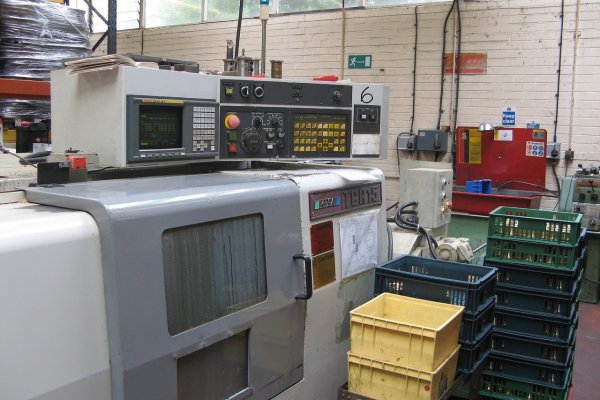
- Computer numerical control (CNC) systems: Automated machining equipment producing complex parts with minimal human intervention
- Automated guided vehicles (AGVs): Self-navigating transport systems moving materials throughout facilities
- Vision systems and sensors: AI-powered quality inspection detecting defects faster and more accurately than human inspectors
- Predictive maintenance systems: IoT sensors and analytics preventing equipment failures before they occur
The Business Case for Automation Investment
While automation requires substantial capital investment, the returns extend far beyond simple labor cost reduction. Automated systems deliver consistency impossible to achieve manually, reducing defect rates and eliminating costly rework. They enable 24/7 production without fatigue-related errors, dramatically increasing throughput.
Critically, automation helps domestic manufacturers compete with low-cost imports by reducing the labor cost differential. When labor represents a smaller percentage of total production costs, proximity to customers, quality advantages, and intellectual property protection become more decisive competitive factors.
However, automation is not a panacea. Implementation challenges include high upfront costs, integration complexity with existing systems, cybersecurity vulnerabilities, and—most significantly—the need for a workforce capable of programming, maintaining, and optimizing these sophisticated systems.
Workforce Training: The Human Element in Modern Manufacturing
The skills required to succeed in modern manufacturing have evolved dramatically. Today's manufacturing workers must combine technical knowledge, digital literacy, and problem-solving abilities that would have seemed extraordinary just a generation ago.
The Skills Gap Crisis
Despite high unemployment in many regions, manufacturers consistently report difficulty finding qualified workers. This "skills gap" reflects a fundamental mismatch between the capabilities of available workers and the requirements of advanced manufacturing environments. Estimates suggest that over two million manufacturing positions may go unfilled in the coming decade due to this shortage.
The skills gap stems from multiple factors:
- Outdated perceptions of manufacturing as low-skilled, dirty, and declining
- Educational systems that haven't adapted to Industry 4.0 requirements
- Rapid technological change outpacing traditional training programs
- Retirement of experienced baby boomer workers taking tribal knowledge with them
- Insufficient emphasis on manufacturing careers in secondary education
Innovative Training Approaches
Forward-thinking manufacturers are addressing workforce challenges through comprehensive training initiatives that combine multiple strategies:
Apprenticeship programs blend classroom instruction with paid on-the-job training, creating pathways for workers without four-year degrees to access high-paying manufacturing careers. These "earn while you learn" models prove particularly effective at attracting younger workers and career changers.
Community college partnerships allow manufacturers to influence curriculum development, ensuring graduates possess directly applicable skills. Some companies even provide equipment to training institutions, guaranteeing students learn on the same systems they'll operate in actual facilities.
Virtual and augmented reality training enables risk-free practice with expensive equipment and dangerous procedures. Workers can repeat exercises until they achieve mastery without consuming production time or materials.
Continuous upskilling programs recognize that training is not a one-time event but an ongoing necessity. As technologies evolve, workers need regular opportunities to expand their capabilities and stay current with best practices.
Changing the Manufacturing Narrative
Beyond training programs themselves, manufacturers must actively combat outdated perceptions of their industry. Modern manufacturing careers offer competitive salaries, safe working conditions, and opportunities for advancement that rival or exceed many white-collar professions.
Effective recruitment strategies include facility tours for students and parents, social media campaigns showcasing actual workers and their achievements, and partnerships with influencers who can reach younger audiences. The goal is demonstrating that manufacturing offers not just jobs, but genuine career paths with purpose and prosperity.
The Integrated Future: Where These Trends Converge
The four themes explored in this article—import competition, digital marketing, automation, and workforce development—are not isolated challenges but interconnected elements of a comprehensive manufacturing strategy.
Automation investments require skilled workers to implement and maintain them. Those trained workers need competitive wages, which automation helps provide by improving productivity and margins. Effective SEO and digital marketing attract both customers and potential employees, showcasing capabilities that differentiate domestic manufacturers from generic importers.
Meanwhile, the threat of imports provides urgency for automation adoption and workforce development, creating a competitive imperative that drives continuous improvement. Companies that excel at digital marketing can better communicate their automation capabilities and skilled workforce, converting these operational advantages into market success.
Conclusion: Manufacturing's Renaissance
Far from being a declining sector, manufacturing is experiencing a renaissance driven by technological innovation and strategic adaptation. The manufacturers succeeding in this environment are those who embrace automation while investing in people, who compete on value rather than cost, and who recognize that digital visibility is as important as production capability.
The path forward requires courage to invest in expensive automation systems, commitment to developing workforce capabilities, creativity in digital marketing approaches, and confidence that domestic manufacturing can compete successfully against low-cost imports when it leverages its unique advantages.
Those who navigate this complex landscape successfully will not only survive but thrive, creating high-value products, good-paying jobs, and sustainable competitive advantages that imports cannot replicate. The future of manufacturing belongs to those who integrate technology and talent, automation and human ingenuity, global awareness and local strength.


