

Understanding Third-Party Logistics in the Modern E-commerce Landscape
The e-commerce revolution has fundamentally transformed how businesses approach inventory management and order fulfilment. At the heart of this transformation lies Third-Party Logistics (3PL), a comprehensive solution that enables online retailers to outsource their entire supply chain operations. As consumer expectations continue to rise, with demands for faster shipping and seamless returns, partnering with a specialized 3PL provider has become not just advantageous but essential for competitive success.
3PL providers offer end-to-end logistics solutions that encompass warehousing, inventory management, order processing, packaging, and shipping. By leveraging the expertise and infrastructure of these specialized companies, e-commerce businesses can focus on their core competencies—product development, marketing, and customer acquisition—while leaving the complexities of logistics to the experts.
The Critical Role of Racking Storage Systems in 3PL Operations
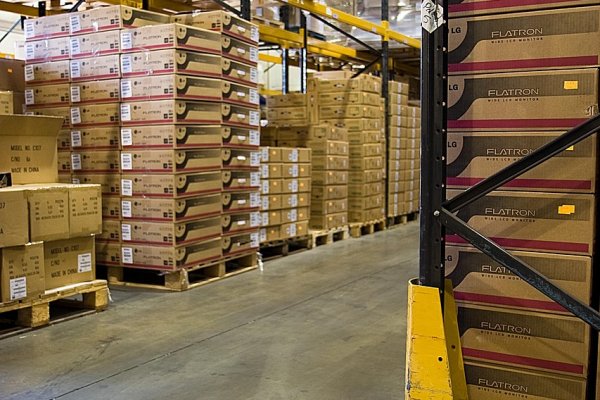
One of the foundational elements that distinguishes professional 3PL providers from amateur operations is their investment in sophisticated racking storage systems. These aren't simply shelves; they're engineered solutions designed to maximize warehouse efficiency, protect inventory, and facilitate rapid order fulfilment.
Types of Racking Storage Solutions
Modern 3PL facilities typically employ multiple racking configurations to accommodate different product types and fulfilment requirements:
- Selective Pallet Racking: The most common system, offering direct access to every pallet and ideal for fast-moving consumer goods
- Drive-In Racking: High-density storage for products with lower turnover rates, maximizing cubic storage capacity
- Mezzanine Systems: Multi-level platforms that effectively double or triple usable warehouse space for smaller items
- Cantilever Racking: Perfect for oversized or irregularly shaped products that don't fit standard pallet configurations
- Automated Storage and Retrieval Systems (AS/RS): Technology-driven solutions that enhance picking accuracy and speed
Benefits of Professional Racking Storage
The right racking storage infrastructure delivers measurable advantages to e-commerce businesses. Optimized space utilization means lower storage costs per unit, while systematic organization reduces picking errors and speeds up order processing times. Additionally, proper racking systems with appropriate weight distribution and safety features protect valuable inventory from damage, reducing shrinkage and improving overall profitability.
When evaluating 3PL providers, examine their warehouse infrastructure carefully. Facilities with modern, well-maintained racking systems indicate a provider's commitment to operational excellence and long-term partnership success.
3PL E-commerce Fulfilment in the UK: Market Dynamics and Opportunities
The United Kingdom has emerged as one of Europe's most sophisticated e-commerce markets, with online retail penetration rates consistently exceeding continental averages. This maturity has fostered a highly competitive and innovative 3PL e-commerce fulfilment UK sector, offering businesses of all sizes access to world-class logistics capabilities.
Why UK E-commerce Businesses Choose 3PL Partners
Several factors drive the growing adoption of 3PL services among UK online retailers:
- Scalability Without Capital Investment: Growing businesses can expand their fulfilment capacity without purchasing warehouse space or hiring permanent staff
- Geographic Optimization: Strategic warehouse locations across the UK enable faster delivery times to major population centers
- Expertise in Complex Regulations: Professional 3PL providers navigate VAT requirements, customs documentation, and carrier compliance seamlessly
- Technology Integration: Modern UK 3PL companies offer sophisticated warehouse management systems that integrate with popular e-commerce platforms like Shopify, WooCommerce, and Magento
- Multichannel Fulfilment: Single inventory pool serving multiple sales channels including direct-to-consumer websites, Amazon, eBay, and retail partnerships
Selecting the Right 3PL E-commerce Fulfilment Partner in the UK
Not all 3PL providers are created equal. When evaluating potential partners, UK e-commerce businesses should consider several critical factors. Location matters significantly—facilities positioned near major motorway networks and population centers deliver faster transit times and lower shipping costs. Technology capabilities should include real-time inventory visibility, automated order processing, and comprehensive reporting dashboards.
Additionally, examine the provider's experience with businesses similar to yours in size and product category. A 3PL specializing in fashion e-commerce may not be optimal for electronics or perishable goods. Request references and case studies that demonstrate proven success with comparable clients.
FBA and 3PL: Complementary Strategies for Amazon Sellers
Fulfillment by Amazon (FBA) has revolutionized how sellers approach the world's largest marketplace, but it's not always the complete solution. Savvy Amazon sellers increasingly adopt hybrid strategies that combine FBA's advantages with independent 3PL partnerships, creating flexibility and risk mitigation.
Understanding FBA Preparation Services Through 3PL Providers
Many specialized 3PL companies offer FBA preparation services that bridge the gap between receiving inventory and getting products Amazon-ready. These services include:
- Product labeling with Amazon-compliant FNSKU barcodes
- Polybagging for items requiring protective packaging
- Bundling multiple products into single sellable units
- Quality inspection to identify damaged goods before they reach Amazon warehouses
- Creating shipment plans and coordinating deliveries to multiple Amazon fulfillment centers
When to Use 3PL Instead of FBA
While FBA offers undeniable advantages including Prime eligibility and Amazon's trusted fulfillment, certain scenarios make independent 3PL providers more attractive. Products with low margins may be eroded by FBA's storage and fulfillment fees, particularly during peak season surcharges. Businesses selling across multiple platforms need inventory accessible for all channels, not locked exclusively in Amazon's network.
Additionally, sellers facing Amazon account suspensions or inventory limits benefit from having alternative fulfillment infrastructure already established. A diversified fulfillment strategy protects business continuity and reduces dependency on any single platform's policies.
FedEx and 3PL: Strategic Shipping Partnerships
Shipping carrier relationships represent one of the most valuable assets 3PL providers bring to their clients. FedEx, as one of the world's premier logistics companies, features prominently in many 3PL shipping strategies, offering speed, reliability, and global reach that individual e-commerce businesses struggle to access independently.
Volume Discounting Advantages
3PL providers aggregate shipping volume across their entire client base, securing negotiated rates with carriers like FedEx that far exceed what individual businesses could obtain. These volume discounts translate directly to reduced shipping costs for clients, often resulting in 30-50% savings compared to standard commercial rates. For e-commerce businesses operating on thin margins, these savings can mean the difference between profitability and loss.
FedEx Service Portfolio Through 3PL Providers
Working with a 3PL that maintains strong FedEx partnerships provides access to the carrier's complete service portfolio:
- FedEx Ground: Cost-effective solution for non-urgent domestic shipments
- FedEx Express: Next-day and two-day services for time-sensitive orders
- FedEx International: Streamlined customs clearance and global delivery options
- FedEx SmartPost: Economical last-mile delivery leveraging postal service partnerships
- FedEx Freight: LTL and pallet shipments for bulk B2B orders
Technology Integration and Tracking
Professional 3PL providers integrate FedEx's advanced tracking systems directly into client-facing dashboards, providing real-time visibility throughout the delivery journey. Customers receive automated notifications at key milestones, reducing "where is my order" inquiries and improving overall satisfaction. This technological integration extends to returns management, with FedEx return labels generated automatically and return tracking seamlessly incorporated into inventory management systems.
Implementing Your 3PL Strategy: Practical Steps Forward
Transitioning to a 3PL partner represents a significant operational change that requires careful planning and execution. Begin by conducting a thorough audit of your current fulfillment operations, identifying pain points, cost centers, and capacity constraints. This baseline assessment provides clear metrics against which to measure 3PL performance improvements.
Questions to Ask Potential 3PL Partners
During the evaluation process, probe deeply into operational specifics:
- What is your average order accuracy rate, and how do you measure it?
- How do you handle peak season volume spikes?
- What redundancies exist in your technology infrastructure?
- Can you provide detailed case studies from similar clients?
- What are your policies regarding inventory insurance and liability?
- How frequently is inventory counted, and what discrepancy resolution processes exist?
The Onboarding Process
Successful 3PL partnerships begin with structured onboarding. Expect to invest 4-8 weeks in the transition process, including system integration testing, staff training, and phased inventory transfer. Start with a limited product range to validate processes before committing your entire catalog. Establish clear communication protocols and performance benchmarks from day one, with weekly review meetings during the initial period.
Conclusion: Embracing 3PL for Competitive Advantage
The modern e-commerce landscape demands operational excellence that few businesses can achieve independently. Third-party logistics providers offer more than warehousing and shipping—they deliver expertise, technology, infrastructure, and carrier relationships that would require years and substantial capital to develop internally. From sophisticated racking storage systems that optimize space utilization to FBA preparation services and preferential FedEx shipping rates, quality 3PL partners provide comprehensive solutions that scale with your business growth.
For UK e-commerce businesses navigating an increasingly competitive market, the question is no longer whether to partner with a 3PL, but which provider aligns best with your specific operational requirements and growth trajectory. By carefully evaluating providers based on infrastructure, technology, experience, and cultural fit, you can establish a logistics partnership that transforms fulfillment from a cost center into a genuine competitive advantage.


